

.... scroll down beyond "Resource Realsim" to find out more about AN67

The Right Way:
from Wellhead to Farm Gate
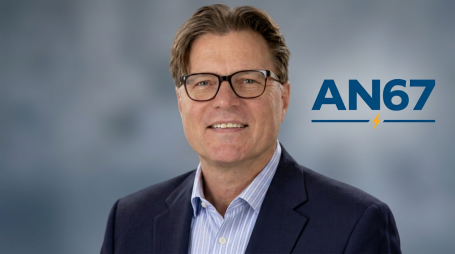
By Andrew Newbery, AN67 | October 2026
In May I warned that Britain was closing the front door on its own sovereign resources while paying the bill at the back. This autumn the bill arrived. On 6 October the RAC's UK average price for diesel passed £2 a litre for the first time, at 200.20p. In Hull, INEOS has idled its Acetyls plants at Saltend, blaming gas and carbon costs.
And in Birmingham, the Conservative Party began to sound like it understands.
What Birmingham Got Right
Kemi Badenoch's *The Right Way* opens its energy chapter with three words I would happily have written myself: "Energy is growth." Prosper UK's *The Price of Power* makes the same point: "Energy policy is growth policy." Launching it, Ruth Davidson said its recommendations "are about growth as much as it's about energy".
That is common ground I welcome. Resource Realism has always been a growth strategy: keep our molecules for British industry, rather than simply burning or exporting them, and we re-industrialise with secure domestic feedstocks, rebuild skilled jobs and repair the national balance sheet through what we make.
The Right Way sets three tests for energy policy - global emissions, deliverability and security of supply - and the first describes exactly what is happening at Saltend: "A policy that closes a British factory only for its output to be replaced by higher-carbon imports has failed the test of improving the environment." It warns against swapping dependence on foreign oil and gas for dependence on Chinese panels and batteries. And it commits to reverse the ban on new North Sea licences, giving the regulator a mandate "to maximise extraction rather than manage decline".
Better still is a passage outside the energy chapter. Recounting the closure and hurried reopening of Rough gas storage, it asks: "Who factors in the time required to rebuild a factory once it has closed?" And it concludes that interdependence is a strength when it is reciprocal, "but vulnerability disguised as efficiency is not."
That is the heart of Resource Realism, now in a Conservative text. Prosper UK adds a practical step: an independent assessment of the minimum refining and fuel storage capacity Britain should keep - something it notes no one in government has done. The centre right is converging on the right questions.
A Programme Within Reach
Birmingham has done the hard part: it has set out first principles. Here is how to apply them to the molecules:
- Back the North Sea with licences, a stable tax regime and decisions on Rosebank and Jackdaw.
- Treat refining, chemicals and fertiliser as critical national infrastructure, and commission the independent assessment of the minimum capacity Britain should keep.
- Fix the carbon border charge: none on inputs we cannot make, such as iron ore and ammonia; a level playing field on carbon and gas costs for the producers we still have.
- Hold strategic stocks of diesel, jet fuel and fertiliser on British soil, with food production and distribution confirmed as priority users.
- Stand behind the Falkland Islanders' right to develop their own resources.
- Build nuclear, renewables, storage and grid in step, and complete the decoupling of electricity from gas.*
The Choice, Again
In April I asked Britain's politicians to make a choice. In Birmingham, one of them began to make it. The Right Way says that energy is growth, and that resilience is not inefficiency. Apply both to the molecules - from wellhead to refinery to farm gate - and the Conservatives will have something no party yet offers: a plan for energy independence and growth that is physically real.
Andrew Newbery | AN67 | www.an67.co.uk
Previous articles: "The Electron Delusion & Resource Realism" (April 2026); "Closing the Front Door on Sovereign Resources, While Paying the Bill at the Back" (May 2026).
* The enemy is not renewables, and it is not hydrocarbons. The enemy is dependence. Resource Realism means using every tool to end it:
“We should have an energy mix that uses all available supply. Renewables should expand where they make power cheaper and more secure; nuclear energy should be treated as a strategic asset rather than a perennial planning problem, and gas as essential even if just for reliability while the system changes. The objective is not to maximise any one of wind, gas, solar or nuclear. It is to build electricity that is cheap, clean, abundant and secure. That means pricing the whole system and using markets and competition wherever they can discover cheaper solutions. Government should intervene where national security, monopoly or genuine external costs require it.”,
The Right Way
generating power
through
connections
Led by Andrew Newbery - infrastructure developer and former Managing Partner of Herbert Smith Abu Dhabi - AN67 provides expertise on the delivery of global power and infrastructure assets.
AN67 was founded in 2025 with a mission: to generate power through connections — delivering commercially robust projects in power-related infrastructure whilst addressing shared challenges, including a cleaner, affordable and more secure future for all of us. Andrew brings over three decades of experience, as set out in Andrew’s LinkedIn profile.
Andrew was one of the three individuals who — via Greenage Power — originated the idea for NeuConnect in 2015, and - together with Frontier Power - those individuals led the project through its formative stages. To support the early development work, Greenage Power incorporated NeuConnect Limited in 2016, enabling the project to enter into UK Grid Connection Agreements required for the successful Initial Project Assessment (IPA) application submitted to Ofgem in late 2016.
In early 2018, following the involvement of institutional investors (Meridiam, Allianz and Kansai Electric Power/KPIC), a new project company — NeuConnect Britain Ltd — was established to take the project forward. The co‑founders retained an equity interest and a board seat in this entity through their newly incorporated FI1 Limited. As part of the commercial arrangements agreed at that time, the development activities, applications and related project interests held by NeuConnect Limited were transferred to NeuConnect Britain Ltd, enabling the investor‑backed entity to assume responsibility for the project thereafter.
The idea for NeuConnect emerged as Andrew concluded his Head of Commercial to Thames Water role on the Thames Tideway Tunnel — another landmark project whose innovative delivery model is now also seen as a precedent for financing major clean power generation assets such as new nuclear.
Three Case Studies are included below, including a Case Study tracking Andrew’s leadership at the inception of the offshore windfarm sector at the turn of the millennium; as well as Case Studies on NeuConnect and on a project financing in Armenia. Andrew has been active in other sectors too including the early petrochemical, fertiliser and LNG projects in Qatar (e.g. QAFAC, QAFCO), various Mining project financings around the world, and also water sector projects.
Other projects are in development and — on a highly selective basis — AN67 will consider advisory mandates across Europe, the Middle East, and parts of Africa. AN67 is, for example, currently advising on power generation and desalination assets in the Gulf.
Power is delivered through the ideas we generate and the connections we build.

Case Study 1:
NeuConnect
Origin Story from 2015 to 2022
CLICK on images below
for information

"Andrew and I founded and originated the NeuConnect project and Andrew took over from me all the early stage development work...",
Mathew Brett, MD
From origination to King's speech
"Greenage Power was formed by Mathew Brett, Andrew Newbery and Lorne Gifford who are experienced energy and infrastructure developers, to originate and develop the NeuConnect project",
from NeuConnect press release


Letter of Support from Minister of State for Energy to
Andrew Newbery, Project Director
August 2016

"NeuConnect was initiated by Mathew Brett, Andrew Newbery and Lorne Gifford of Greenage Power, with early stage advisory support from Volta Partners...",
extract from IPA Submission to Ofgem, October 2016
Greenage Power - and its affiliates NeuConnect Limited* and FI1 Limited - started the NeuConnect project, including negotiating the Grid Connection agreements (a condition precedent to the IPA submission made in October 2016)
*the original NeuConnect company incorporated by the co-orignators

National Grid, 10 Year Statement, 2017

Bundesnetzagentur, 2021
Tagline
"1.3 Die Vorhabenträgerin
Das Projekt NeuConnect wird von der NeuConnect Deutschland GmbH, verantwortlich für den deutschen Vorhabenabschnitt, und der NeuConnect Britain Ltd., verantwortlich für die Vorhabenabschnitte in den Niederlanden und Großbritannien, geplant und realisiert. NeuConnect ist ein „stand-alone“ Interkonnektor-Projekt. Hinter dem Projekt steht ein Konsortium erfahrener Infrastrukturfinanzierer und -betreiber. Die beteiligten Firmen Meridiam SAS, Allianz Capital Partners im Auftrag der Allianz Gruppe und Kansai Electric Power stehen aufgrund ihrer Erfahrung und Kompetenz für eine erfolgreiche sowie effiziente Projektdurchführung. Darüber hinaus wird das Projekt von Greenage Power und Frontier Power als Entwickler unterstützt. ",
Bundesnetzagentur website, March 2021

"...The NeuConnect project was initiated in 2015 by Greenage Power ... an SPV set up by 3 energy
and infrastructure experts....
Greenage Power's founders (Mathew Brett, Andrew Newbery, Lorne Gifford) and Frontier Power's founders (Humza Malik, Iain Cameron) established FI1 - a vehicle through which they could hold an equity interest in the project.",
per IJ Global, as updated 01 Nov 2022 11:27
Successful exit for
originators (2022):

" Tokyo Electric Power Company’s subsidiary TEPCO Power Grid UK has acquired FI1 – a company that holds a minority stake in the NeuConnect project.
Through the purchase, TEPCO has acquired FI1’s 2% stake in the interconnector project, together with an [...] option of 4.5%.
Neuconnect's new shareholding is:
- Meridiam – 53.5%
- Allianz Capital Partners – 26.2%
- Kansai Electric Power – 18.3%
- TEPCO Power Grid UK – 6.5% ...",
IJGlobal, 26 August 2022
NeuConnect
Legacy

"...In early 2016, before be had brought in other developer stakeholders, we initiated direct engagement in Germany with the Bundesnetzagentur, Germany’s federal energy regulator. This early bilateral work was crucial: it laid the groundwork for NeuConnect’s cross-border credibility, regulatory alignment..."
Case Study 2:
Andrew Newbery leading finance negotiations of first greenfield project financed IPP in Armenia
CLICK on images for information

Andrew Newbery in Yerevan being introduced to Nikol Pashinyan, The Prime Minister of the Republic of Armenia

Andrew, RENCO and Siemens at the Yerevan negotiation table with the Armenian Prime Minister,
Press Office of the Government of Armenia, 2020

Case Study 3:
Aeolus ...
Andrew Newbery shaping the origins of
offshore wind project financing
CLICK on images for information

'... renewable energy is now
an imperative...'
Andrew Newbery, then a partner at Norton Rose, quoted in 2002 on his role in shaping
the future ofoffshore windfarm project finance,
Law Society Gazette,
1 March 2002
Articles
of interest:


The Times, Letters,
17 March 2026, Sewage loophole and 'dry-day' spills

"...a fundamental friction exists between planning law and water regulation...",
Andrew Newbery, The Times, 17 March 2026


The Evisceration of CATO: the Premature Death of Competitive Tendering in UK 'Onshore' Transmission Delivery
Andrew Newbery, Utilities Law Review - Volume 21 - Issue 5

COP28: a turn up for nuclear? by Robert Armour, Andrew Newbery and others
February 2024 | SPOTLIGHT | SECTOR ANALYSIS
Financier Worldwide Magazine

Chapter 3 -
CHANGES IN UNITED KINGDOM ENERGY POLICY:
Stimulus for Significant Long-Term Growth in the United Kingdom's Offshore Wind Generation,
ANDREW NEWBERY & JONATHAN EVANS,
Intersentia, 2004
... Podcasts and Videos:

"...I am joined by ... Andrew Newbery, to discuss opportunities in the water sector in the Middle East and North Africa region. Andrew has been heavily involved in major water and utility projects in Saudi, the UAE and elsewhere in MENA since the 1990s and he has been based in the region for a number of years..., including water projects, in the MENA region. Since joining Gowling WLG in 2016, he and the firm have consistently been ranked Tier 1 by legal publications in the water sector..." Imran Mufti, Partner, Gowling WLG

Contact us:

